

In 1932, Australia sent soldiers armed with machine guns to fight an unexpected enemy: around 20,000 emus. What happened next sounds like a joke, but it is real history. And according to almost everyone who tells it, the emus won the war.
≈20,000
emu “enemies”
2
machine guns
≈10
bullets per emu killed
An invasion of feathers
After the First World War, many Australian veterans were given land in Western Australia to grow wheat. With the Great Depression, grain prices collapsed, and to make things worse, in 1932 around 20,000 emus arrived after their breeding season, moving in from the interior in search of food and water. They ate the crops and broke down fences, opening the way for rabbits.
The army steps in
The farmers asked the government for help, and the Minister of Defence agreed to send Major G. P. W. Meredith of the Royal Australian Artillery, with two soldiers, two Lewis machine guns and 10,000 rounds of ammunition. The operation began on November 2, 1932.
The plan seemed simple, but the emus did not cooperate. As soon as the shooting started, they split into small groups and ran off at full speed (they can top 30 mph). One of the machine guns jammed. The soldiers mounted another on a truck, but on that rough ground it was impossible to aim.
According to the army’s own report, it took about ten bullets for every emu killed.
Retreat… and a second attempt
After a few days of ridiculous results and mocking headlines in the press, the army withdrew on November 8. But the emus carried on as before, so the operation resumed on November 13 and lasted until December 10. Meredith reported 986 emus killed with 9,860 rounds. He even remarked, with some admiration, that if he had soldiers who could take bullets like those birds, he could face any army in the world.
So who won?
The emus. The bird population was barely affected and the problem continued. In the end, what worked were bounties for each emu and, above all, fences to protect the fields. Ever since, the “Great Emu War” has been one of Australians’ favorite stories.
Did you know…?
The emu appears on Australia’s coat of arms alongside the kangaroo. It is often said they were chosen because neither can easily walk backwards, a symbol of a country that always moves forward.
Test what you have learned
True or false?
1The Emu War took place in Australia in 1932.
True. It happened in Western Australia, in November and December.
2The army wiped out all the emus within a week.
False. The birds scattered and the operation was a failure.
3Emus can run faster than 30 mph.
True. That is why they were almost impossible to aim at.
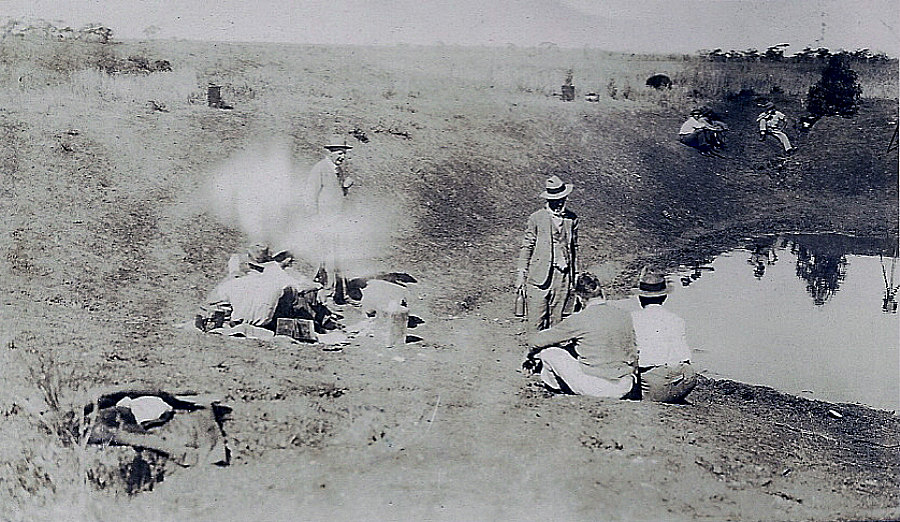
Image: Australian soldiers resting during the Emu War (1932). Unknown author, public domain, via Wikimedia Commons.