
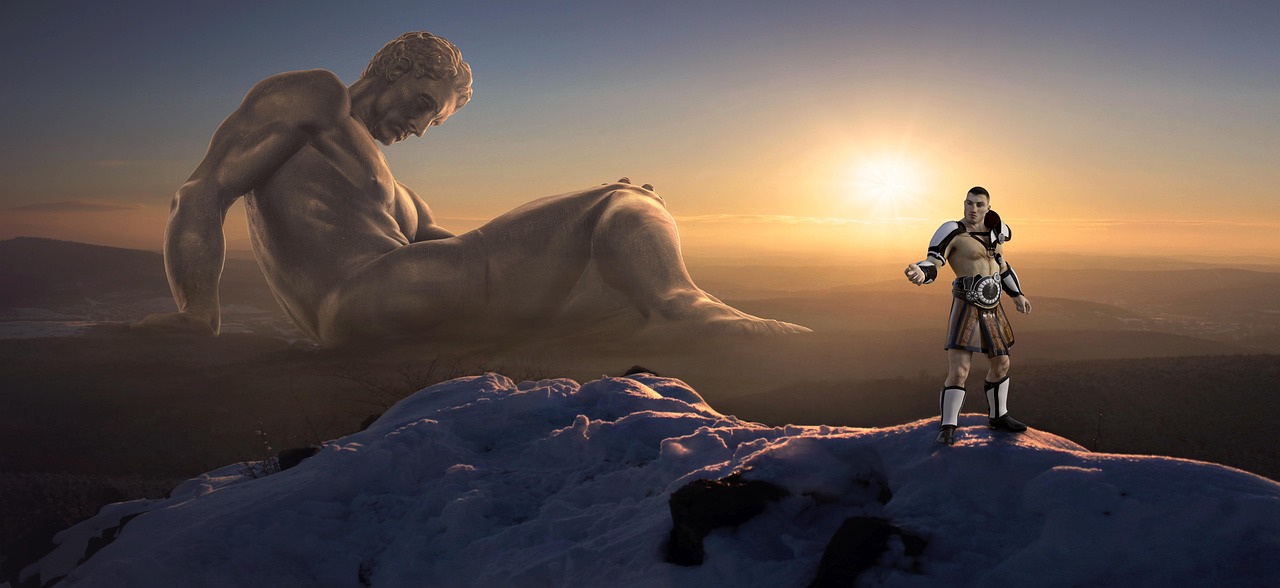

A Giant Born from the Spoils of War
Imagine building one of the most colossal and admired monuments in human history, only to see it collapse just a few decades later. That is precisely the tragic and fascinating story of the Colossus of Rhodes, one of the iconic Seven Wonders of the Ancient World. Located on the prosperous island of Rhodes in modern-day Greece, this breathtaking bronze sculpture was conceived not only as a religious tribute, but as the ultimate symbol of victory and freedom for a people who had survived a devastating military siege.
It all began in 304 BC, when the conqueror Demetrius I abandoned the siege of Rhodes, leaving behind a massive amount of military equipment. Instead of discarding the enemy siege engines, the Rhodians decided to sell the abandoned war gear for the staggering sum of 300 talents. With these vast funds, the city commissioned the talented local sculptor Chares of Lindos to design a colossal statue dedicated to the sun god, Helios, the spiritual patron of the island.
Twelve Years of Labor for Fifty-Four Years of Glory
The monumental construction began in 292 BC. For 12 long years, Chares of Lindos and his craftsmen worked tirelessly, raising the sculpture tier by tier. The Colossus reached an impressive height of approximately 70 cubits, or about 32 to 33 meters tall, standing atop a 15-meter white marble pedestal. In 280 BC, the statue was finally completed, leaving the entire Mediterranean world in awe of its grand design.
However, the standing glory of the Colossus was tragically short-lived. In 226 BC, a mere 54 years after its completion, a powerful earthquake struck the island of Rhodes. The violent seismic forces snapped the statue at its knees, causing it to crash down onto the land. Ptolemy III offered to fund its entire reconstruction, but the people of Rhodes declined the generous offer. The Oracle of Delphi had warned them that the collapse was a divine sign, suggesting that rebuilding the statue might deeply offend Helios.
The Majesty of a Fallen Giant
Despite lying shattered on the ground, the Colossus of Rhodes lost none of its magnetic appeal. The gigantic ruins of the sculpture lay undisturbed on the earth for over 800 years, becoming one of the most celebrated travel destinations of classical antiquity. Prominent ancient chroniclers and historians, such as Strabo and Pliny the Elder, journeyed to Rhodes specifically to behold the sheer scale of the ruins.
Pliny the Elder wrote with wonder about the immense scale of the fallen monument. He noted that even lying on the ground, few men could wrap their arms around the statue’s thumb, and its individual fingers were larger than most full-size statues of the era. The sheer majesty of its broken bronze pieces continued to humble everyone who came to see them.
The Mysterious Final Chapter of the Ancient Bronze
The final fate of the Colossus remains a subject of historical debate. Traditional accounts recall that in 653 AD, following the conquest of the island, the Arab general Muawiya I sold the remaining bronze fragments to a traveling merchant. Popular legend holds that the buyer required a caravan of 900 camels to haul the bronze away. While modern historians view the story of the 900 camels as likely historical propaganda, the precious metal fragments ultimately vanished into history.
Sources
- Wikipedia: Colossus of Rhodes
- Pliny the Elder: Natural History (Book XXXIV)
- Strabo: Geography (Book XIV)