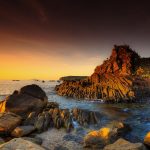

Lake Natron is one of the most enigmatic and extreme environments on Earth, a highly alkaline salt lake located in the Ngorongoro District of the Arusha Region in Tanzania, extending all the way into Kenya. This unusual natural wonder fascinates scientists and travelers worldwide due to its extreme chemical properties, which are capable of calcifying the bodies of living creatures that die in its waters, preserving them in a haunting manner.

Quick facts
- Location: Ngorongoro District, Arusha Region, Tanzania (extending into Kenya).
- Alkalinity: Water pH can reach over 12 due to sodium carbonate and local minerals.
- Temperature: Frequently exceeds 40 °C and can reach up to 60 °C.
- Wildlife: The only regular breeding site in East Africa for 2.5 million lesser flamingos.
- Protection: Designated on the Ramsar List of Wetlands of International Importance on July 4, 2001.
Why does Lake Natron calcify animals that die in its waters?
The most eerie and fascinating aspect of Lake Natron is the phenomenon of body calcification. The chemistry of the water in this basin is extraordinarily harsh and complex. The heavy concentration of minerals, particularly sodium carbonate washed in from surrounding volcanic formations, elevates the alkalinity of the water to extreme levels, reaching a pH greater than 12 in various regions.
When a creature dies in the water or along its shores, the unique chemical composition acts as a powerful natural preservative. Sodium carbonate and mineral deposits calcify the remains of dead animals, turning them into rigid, encrusted figures. This natural process mirrors ancient Egyptian mummification, leaving behind calcified remains that resemble stone statues preserved across time.
The striking deep red color of Lake Natron’s waters
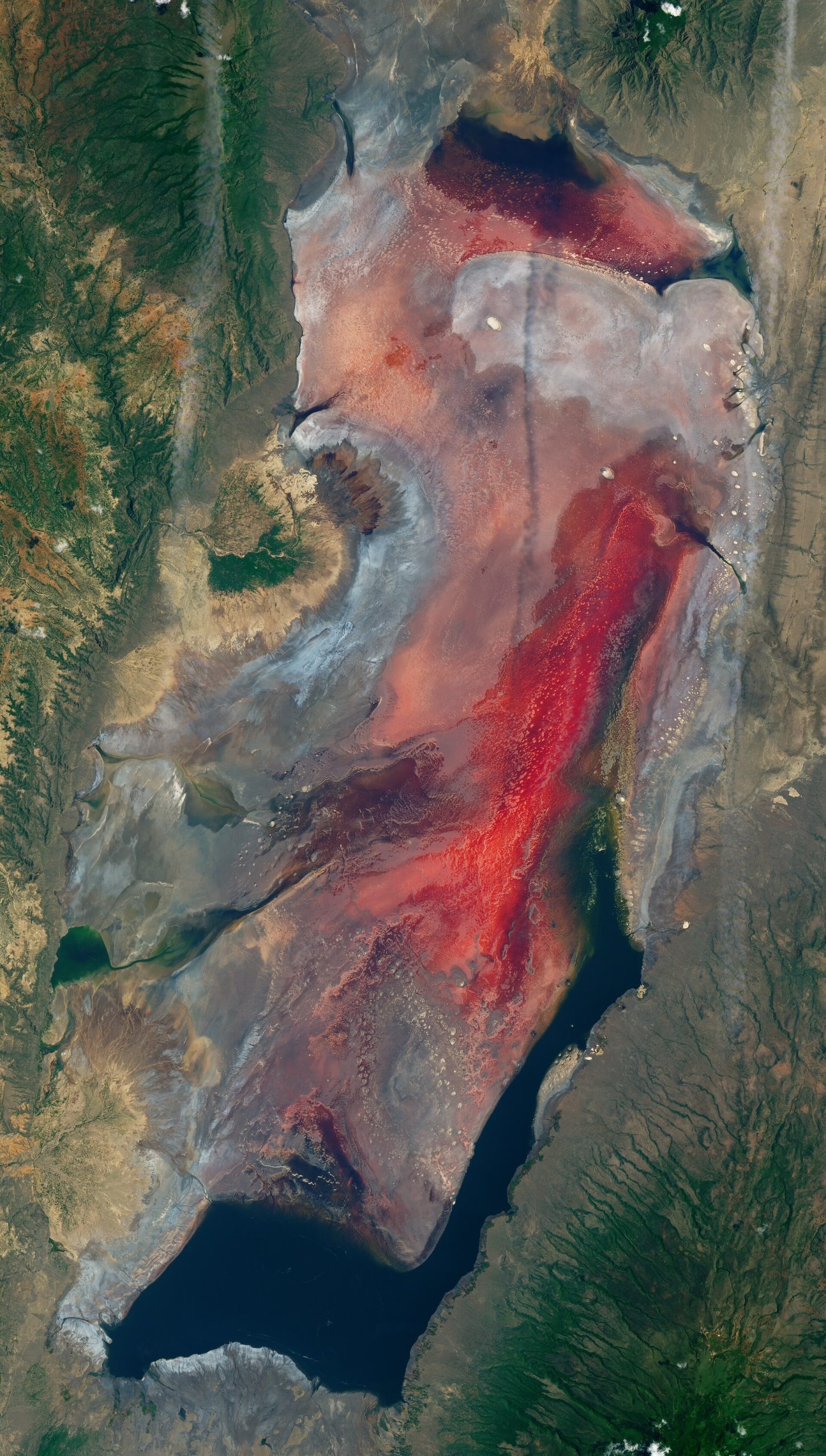
Beyond its calcifying properties, Lake Natron is famous for its vibrant appearance. The water displays a deep red color in open waters and bright orange tones in shallow areas. This striking coloration is not caused by mineral sediments alone, but rather by the massive presence of specialized microorganisms adapted to hostile environments.
Halophilic cyanobacteria are microalgae that thrive in waters with extreme salinity and alkalinity. These organisms produce a red photosynthetic pigment that absorbs sunlight for photosynthesis. As these cyanobacteria multiply in vast numbers, they turn the surface of the lake into a crimson landscape that can be clearly seen from aerial photographs and satellites.
Extreme heat and an unexpected biological sanctuary
The environmental conditions surrounding Lake Natron present an intense thermal challenge. Water temperatures in the lake frequently exceed 40 °C and can reach up to an astonishing 60 °C in shallow areas exposed to direct sunlight. This blistering heat, combined with caustic alkaline water, makes the environment inhospitable for most plant and animal life.
Yet, despite these lethal conditions, Lake Natron serves as a vital sanctuary for wildlife. It is the only regular breeding site in all of East Africa for approximately 2.5 million lesser flamingos. These birds build their nests on isolated salt islands, where the dangerous caustic water creates a natural barrier that prevents predators from reaching their eggs and chicks.
Environmental protection and international significance
Recognizing the extraordinary ecological value and fragility of this unique wetland, conservation efforts have been established to protect the basin. On July 4, 2001, Tanzania officially placed the Lake Natron basin on the Ramsar List of Wetlands of International Importance.
This designation highlights the global environmental importance of the site, safeguarding its unique water chemistry and protecting the reproductive cycle of millions of flamingos that depend entirely on these red alkaline waters for their survival.
Frequently asked questions
Where is Lake Natron located?
Lake Natron is located in the Ngorongoro District within the Arusha Region of Tanzania, extending northward to the border with Kenya.
Why does Lake Natron petrify living creatures?
Living creatures that die in the lake become calcified due to high concentrations of sodium carbonate and minerals that push the water alkalinity to a pH level above 12.
What causes the red color in Lake Natron?
The deep red color in open water and orange shades in shallow areas are created by the red photosynthetic pigment of halophilic cyanobacteria living in the lake.
Which animals rely on Lake Natron for breeding?
Lake Natron is the sole regular breeding site in East Africa for 2.5 million lesser flamingos, using the extreme waters to stay protected from predators.
If you love natural mysteries and extreme places on Earth, make sure to visit our YouTube channel @CuriosoyLoco and follow our Facebook page for more amazing content!
Sources
- Wikipedia: Lake Natron
- Ramsar Sites Information Service: Lake Natron Basin