

The Day the Earth Shined Bright Enough to Read at Night
The Carrington Event of 1859 remains the largest geomagnetic storm ever recorded in human history. In early September of that year, our planet experienced one of the most violent solar disturbances ever documented by science, a phenomenon that turned night into day and exposed the fragility of our emerging global communication networks. Historical records of this unique event range from pioneering astronomical observations to massive electrical surges that terrified telegraph operators of the era.

Quick facts
- Who: Astronomers Richard Carrington and Richard Hodgson.
- When: September 1 and 2, 1859.
- Where: Global scale, with auroras visible in Colombia, Cuba, Mexico, Hawaii, and Japan.
- Most striking figure: The coronal mass ejection traveled 150 million kilometers in just 17.6 hours.
The First Observation of a Solar Flare
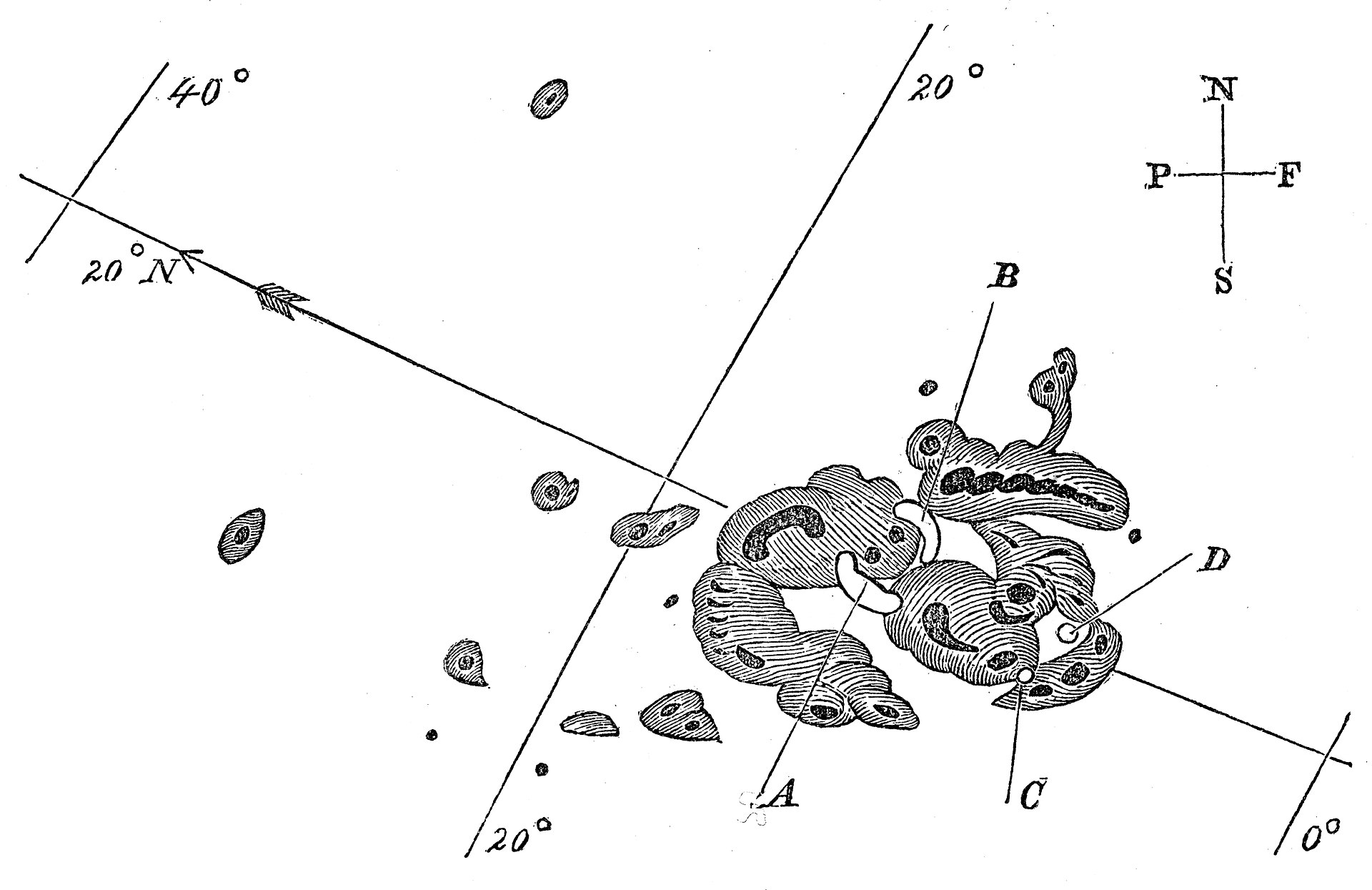
On September 1, 1859, British astronomers Richard Carrington and Richard Hodgson independently recorded the first documented observation of a solar flare in scientific history. While observing sunspots through their telescopes, they witnessed a burst of white light of extraordinary intensity erupting directly from the Sun’s surface. That initial explosion was merely the prelude to an unprecedented electromagnetic cataclysm heading straight toward our planet at unprecedented speed.
Carrington suspected a solar-terrestrial link after observing a “magnetic crochet” at the Kew Observatory, though he remained cautious, noting that one swallow does not make a summer. Worldwide reports of the storm’s effects were later compiled by American mathematician Elias Loomis, validating the observations of Carrington and physicist Balfour Stewart.
A Record Solar Storm and Auroras at the Equator
The resulting geomagnetic storm peaked between September 1 and 2, 1859, during solar cycle 10. The coronal mass ejection (CME) raced toward Earth at incredible speed, covering 150 million kilometers in just 17.6 hours, a journey that normally takes days. It is believed that a prior CME on August 29 cleared the path of ambient solar wind plasma, allowing for this record-breaking speed.
As a result of this impact, auroras were observed worldwide, reaching very low latitudes near the equator such as Colombia, Cuba, Hawaii, and south-central Mexico, astonishing populations that had never witnessed such a celestial spectacle. Even in places like Queensland, Japan, and China, the sky was stained with colors, leaving records of an indescribable beauty that some interpreted as a sign of the end of days.
Early-Rising Miners and Nighttime Reading
The brilliance of the night sky was so dazzling that it left memorable marks in the popular culture of the time. In the Rocky Mountains of the United States, the aurora was so bright that it woke up gold miners, who began preparing breakfast believing mistakenly that dawn had arrived. Likewise, it was officially reported that in the northeastern United States people could read the evening newspaper solely by the light emitted by the aurora borealis.
In cities like Baltimore, witnesses described light covering the entire firmament, surpassing the brightness of a full moon. An Australian gold miner, C. F. Herbert, recounted decades later how the bright purple and colored lights woke him and his mates, describing a scene of beauty that he would never forget. For some, it was a glimpse of divine immanence; for others, a terrifying omen.
The Collapse of Telegraph Lines
Nineteenth-century technology suffered the direct consequences of solar fury. Telegraph systems across Europe and North America completely collapsed, sparking, giving electric shocks to operators, and even igniting some transmission stations. However, human ingenuity proved its worth when telegraph operators between Boston and Portland disconnected their batteries and successfully transmitted messages for about two hours using only the electric current induced by the aurora. This conversation proved that auroral current could be more powerful and stable than the batteries of the time.
What do we know about these super-events today?
Modern research, including the analysis of isotopes like carbon-14 in tree rings and beryllium-10 in ice cores, has revealed that the Carrington Event was not unique in history. Signatures of massive solar storms have been detected in the years 774-775 and 993-994, with the 775 event being ten times larger than Carrington. There is even evidence of an event in 7176 BCE that might have surpassed all recorded ones.
In economic terms, a similar event today would be catastrophic. Studies by Lloyd’s of London estimate losses of up to US$2.6 trillion in the US alone, affecting everything from the power grid to global agricultural production. It is estimated that limited access to fertilizers and pesticides due to industrial disruption could reduce crop yields by up to 75% in regions like Central Europe.
Frequently asked questions
What exactly was the Carrington Event?
It was the largest geomagnetic storm recorded in modern history, triggered by a powerful coronal mass ejection from the Sun that slammed into Earth’s magnetic field.
When did this phenomenon occur?
It took place on September 1 and 2, 1859, coinciding with solar cycle 10 and being scientifically documented for the very first time.
What damage did it cause to technology?
Telegraph networks of the era completely collapsed, generating sparks, electric shocks to operators, and small fires across multiple stations.
If you love extreme and mysterious natural phenomena, check out our other incredible stories. Don’t forget to watch the full video on our YouTube channel @CuriosoyLoco and follow our Facebook page for more amazing facts.
Sources
- Wikipedia: Carrington Event (https://en.wikipedia.org/wiki/Carrington_Event)
- Royal Astronomical Society: Monthly Notices, observations of solar flares by Richard Carrington and Richard Hodgson.